Work collection · 17 projects

Research & Engineering

Explore chemical and gas EOR through interactive studies and engineering workbenches, plus teaching companions that connect calculations with their explanations. Adjust model parameters and inspect the assumptions behind each study.

Institutional research is presented separately from Adel Labs client work. These studies do not imply endorsement of Adel Labs by any institution or funder.

17 projects

Engineering Tools

4 projects

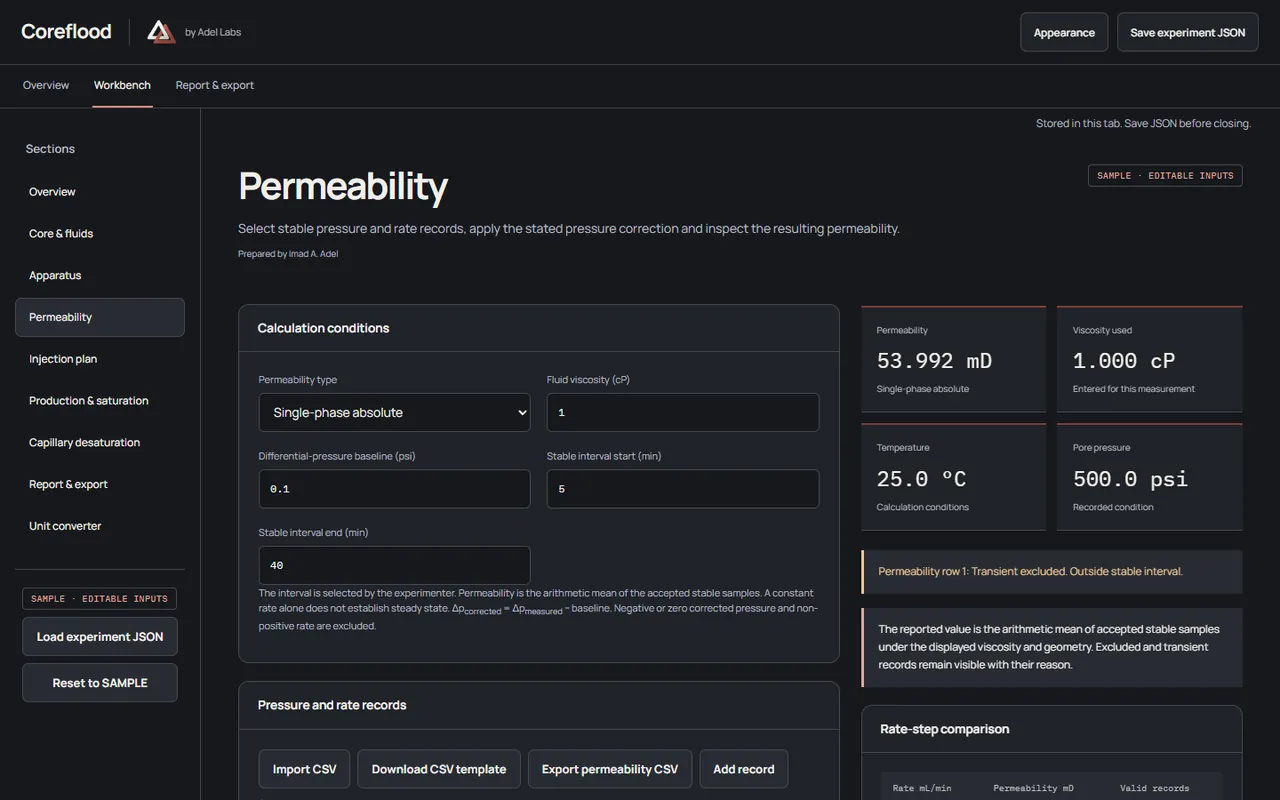
Coreflood opening page with the LINK header, experiment introduction and playing SAMPLE apparatus walkthrough.

Institutional research · Coreflood experiments

Research & Engineering

Coreflood

Plan and analyse laboratory coreflood experiments: geometry, permeability, injection, production and capillary desaturation. Editable SAMPLE data and local exports.

SAMPLE experiment. Plans and analyses records; it does not control laboratory equipment or certify an operating procedure.

Project context: Coreflood

Full titleCoreflood — Coreflood Workbench

The task
An experiment needs a consistent record from core measurements to recovery calculations.
The contribution
A browser workbench for geometry, permeability, injection stages, production and capillary desaturation, with local exports.
Scope & assumptions
Units, measured inputs and calculation assumptions must be reviewed for the experiment.
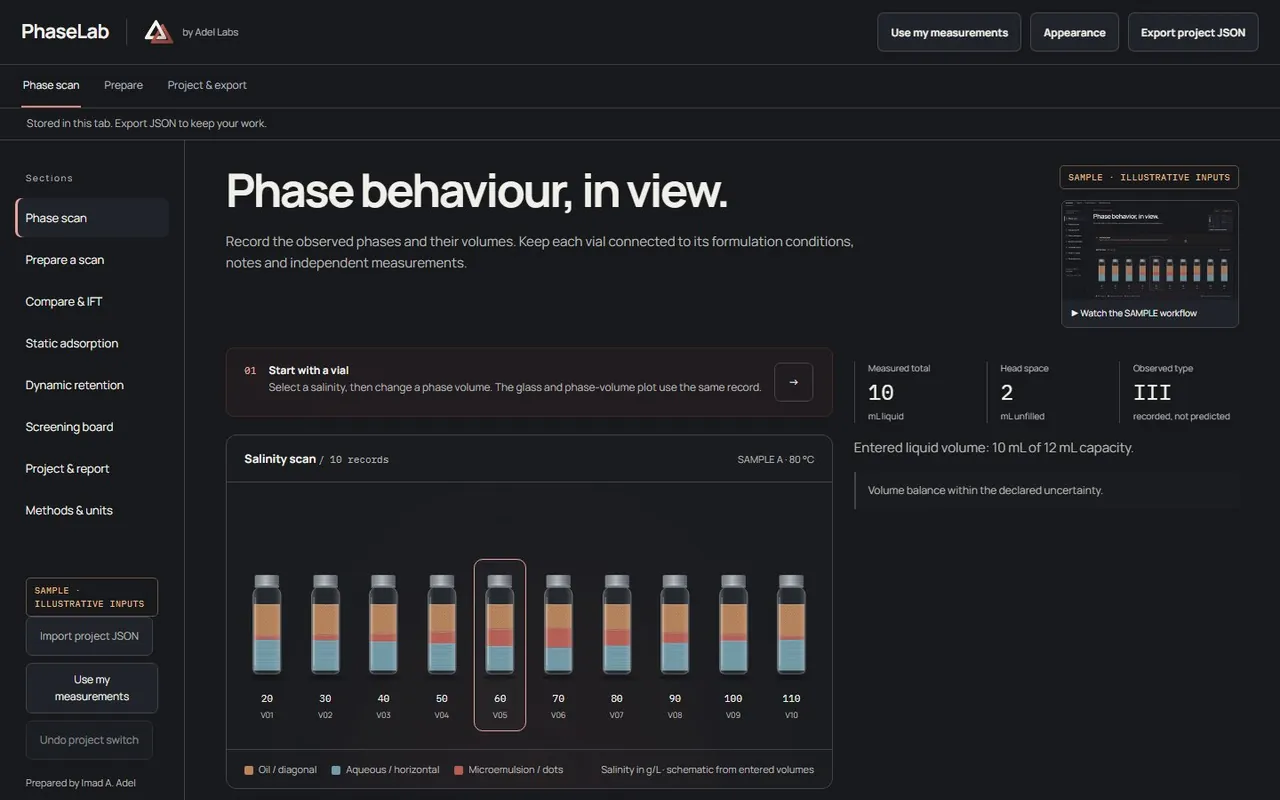
PhaseLab opening workspace with the LINK header and ten SAMPLE salinity-scan vials.

Institutional research · Phase behaviour

Research & Engineering

PhaseLab

A ten-vial phase scan with measured IFT, corrected static adsorption and dynamic retention balances.

SAMPLE starting data. Phase classification and interfacial tension require observations or independent measurements.

Project context: PhaseLab

Full titlePhaseLab - Phase Behavior & Retention

The task
A screening study needs a connection between vial observations, formulation conditions and retention measurements.
The contribution
A workbench for phase records, measured evidence, static and dynamic retention calculations and a screening board.
Scope & assumptions
Illustrations do not determine phase classification or measured interfacial tension.
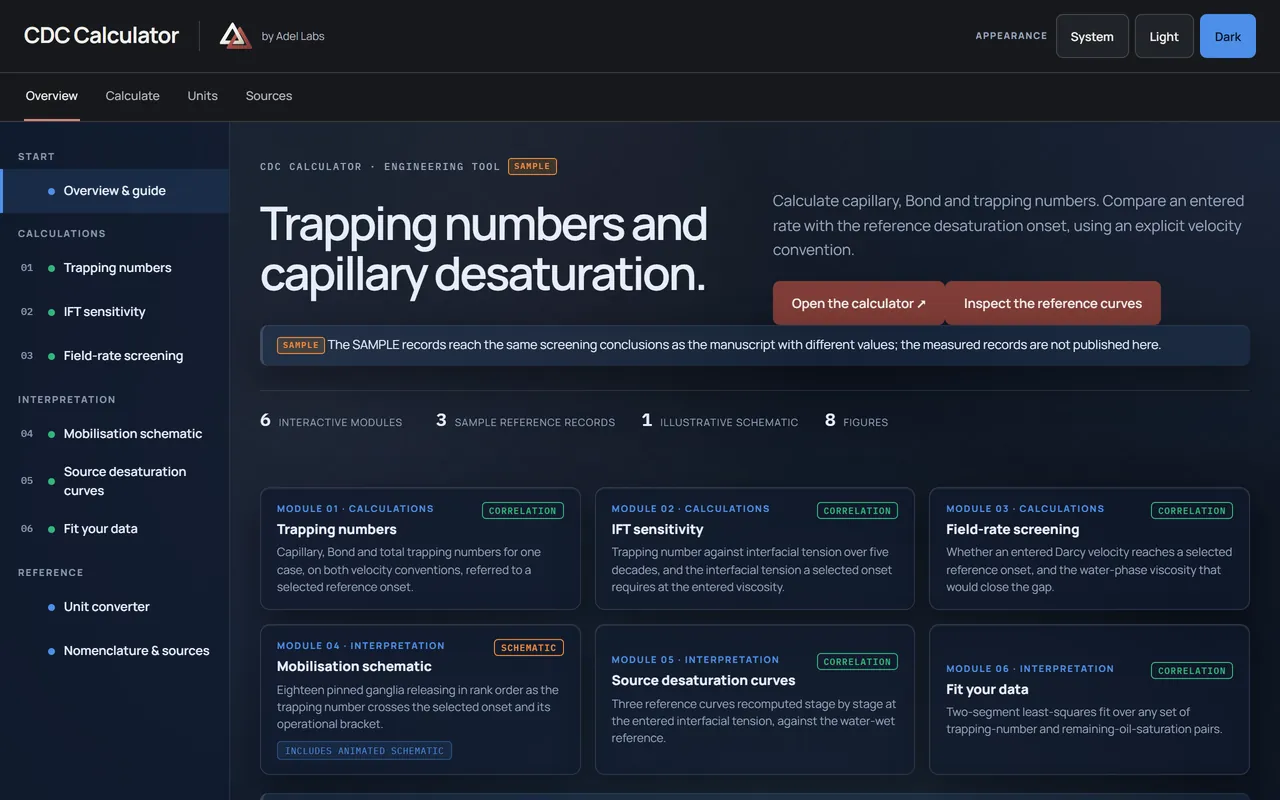
CDC Calculator opening page with the LINK header, trapping-number introduction and six calculation modules.

Institutional research · Calculator

Research & Engineering

Critical Trapping Numbers and Capillary Desaturation

Compare trapping numbers on interstitial and Darcy bases, screen field rates against measured onsets, fit desaturation data and convert petroleum units.

Screening calculations with explicit velocity conventions and measured reference onsets; not a field-design tool.

Project context: Critical Trapping Numbers and Capillary Desaturation
The task
Screening a field rate against measured mobilisation onsets needs the calculation, the reference data and the unit conversions in one place.
The contribution
Six modules: a trapping-number calculator, curves against interfacial tension, field-rate screening, a pore-scale mobilisation schematic, program desaturation curves and a fit for your own data, with a unit converter.
Scope & assumptions
A screening workbench with its assumptions in view, not a field-design tool.
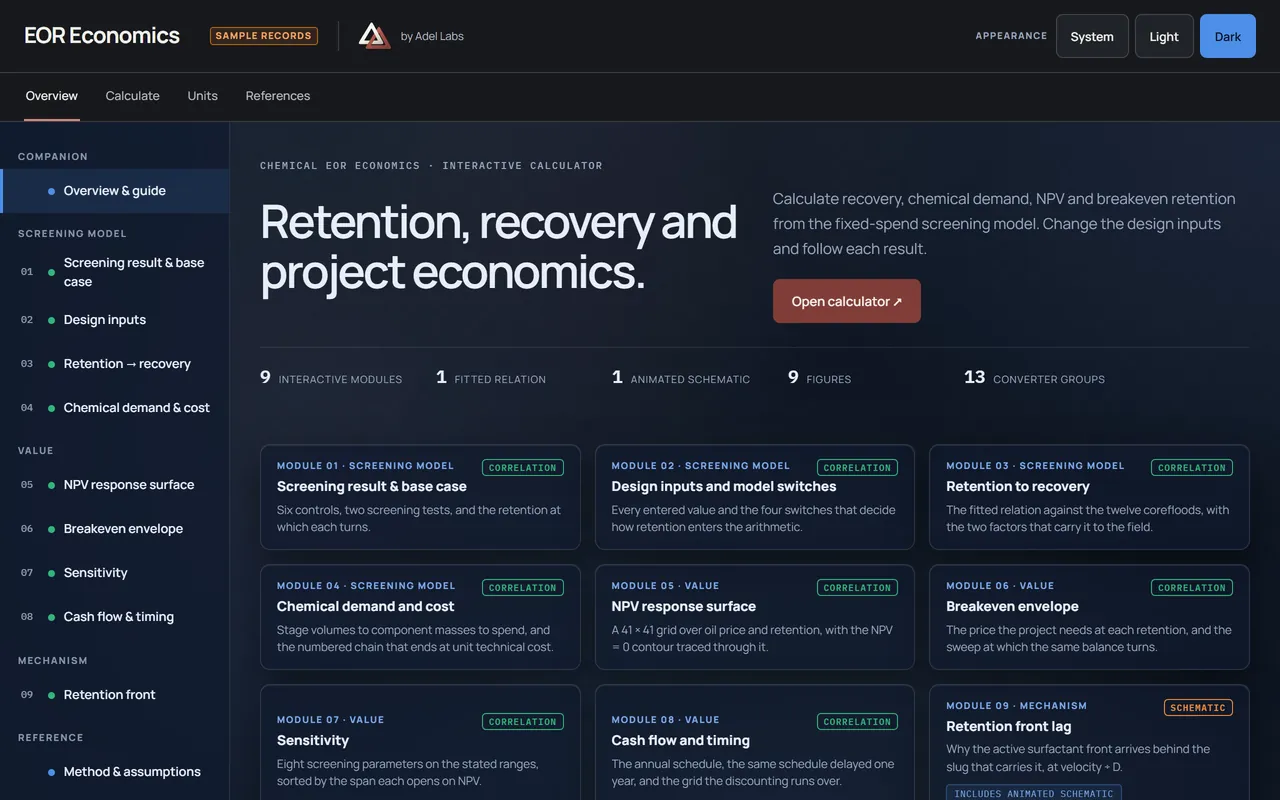
EOR Economics opening page with the LINK header, screening introduction and calculation modules.

Institutional research · Calculator

Research & Engineering

Techno-Economic Screening Workbench

Fitted retention–recovery relation, chemical demand and unit technical cost, an NPV surface over oil price and retention, and the breakeven envelope.

Scenario screening depends on the stated technical and economic assumptions.

Project context: Techno-Economic Screening Workbench

Full titleTechno-Economic Screening under Retention Uncertainty

Research Hubs & Interactive Reports

9 projects

CEOR programme

Surfactant CEOR Project opening page with an offshore-platform film and the carbonate-reservoir research introduction.

Surfactant CEOR

Institutional research · Program hub

Research & Engineering

Surfactant CEOR Project

Explore surfactant recovery in carbonate reservoirs through capillary desaturation, retention screening and economics. Compare live scenarios, then open each study's interactive report.

Research programme · Abu Dhabi

Project context & resources: Surfactant CEOR Project
The task
Capillary desaturation, retention screening and economics examine different parts of the same research program. Readers need a clear route between them.
The contribution
A programme hub linking the studies and their interactive calculations. A research programme, shown here as research, not as studio client work.
Scope & assumptions
Each study keeps its own assumptions and research context; the hub provides the route through the program.
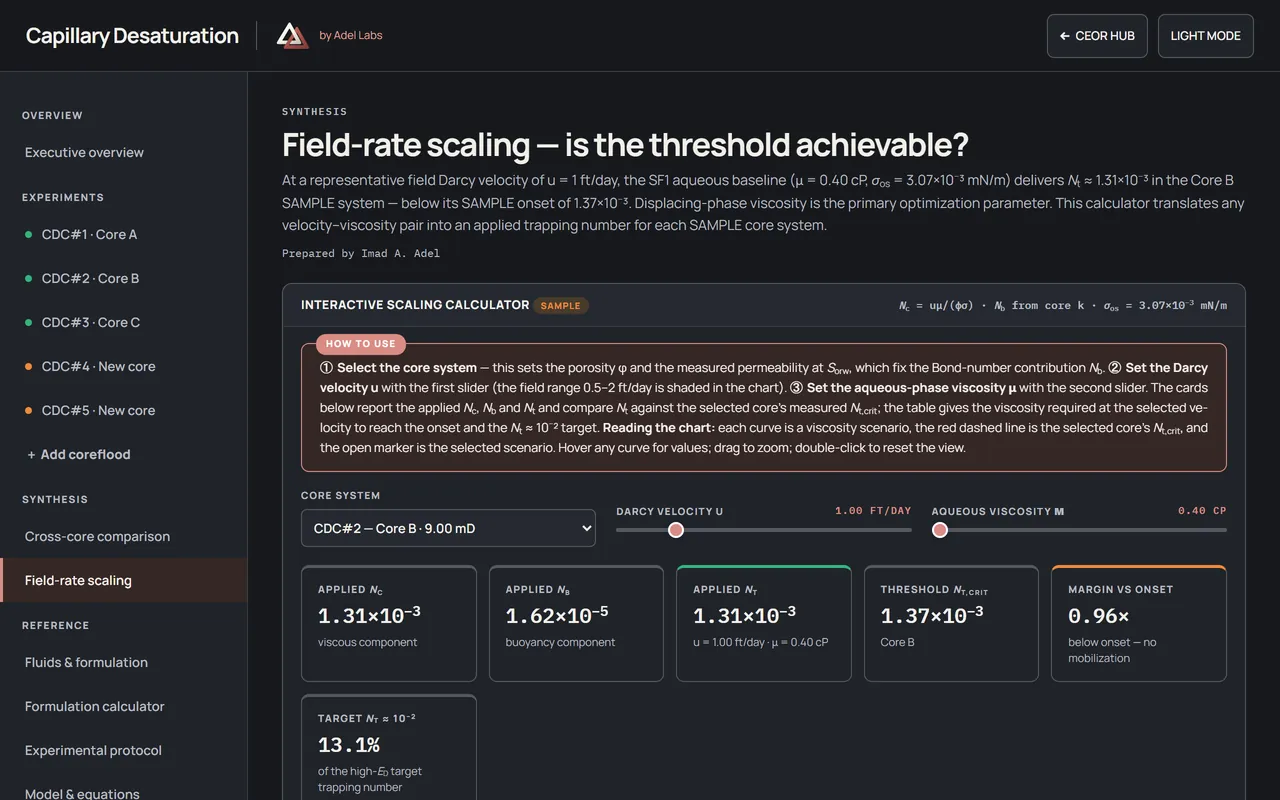
Capillary desaturation field-rate calculator showing trapping number against Darcy velocity and the viscosity screening table.

Surfactant CEOR

Institutional research · Study 01

Research & Engineering

Capillary Desaturation Program, HTHS Carbonates

Desaturation curves on aged mixed-wet carbonate plugs, the critical trapping number for mobilisation, and onsets 31–140× over the sandstone benchmark.

Research programme · Abu Dhabi

Project context & resources: Capillary Desaturation Program, HTHS Carbonates

Full titleCapillary Desaturation Program — HTHS Carbonates

Cross-core comparison

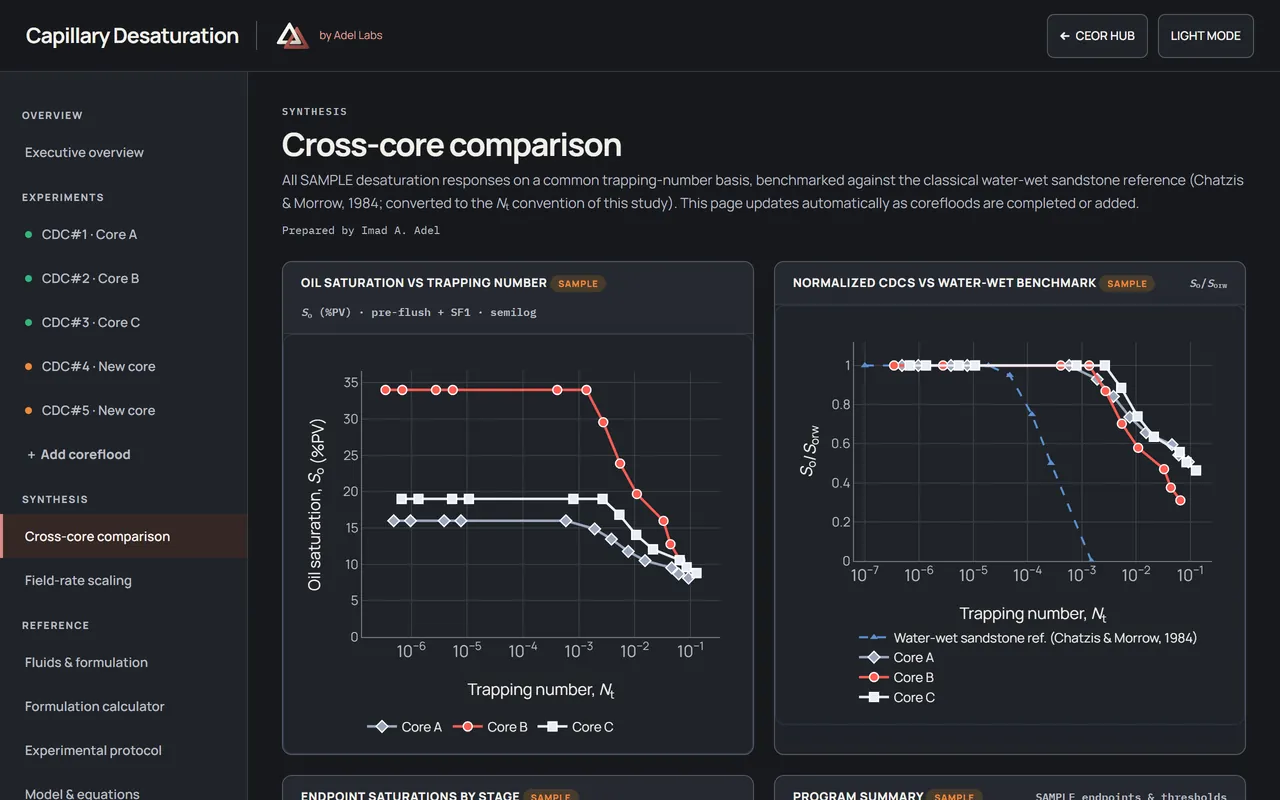
Capillary desaturation cross-core comparison with oil saturation against trapping number, normalized curves and a water-wet sandstone benchmark.
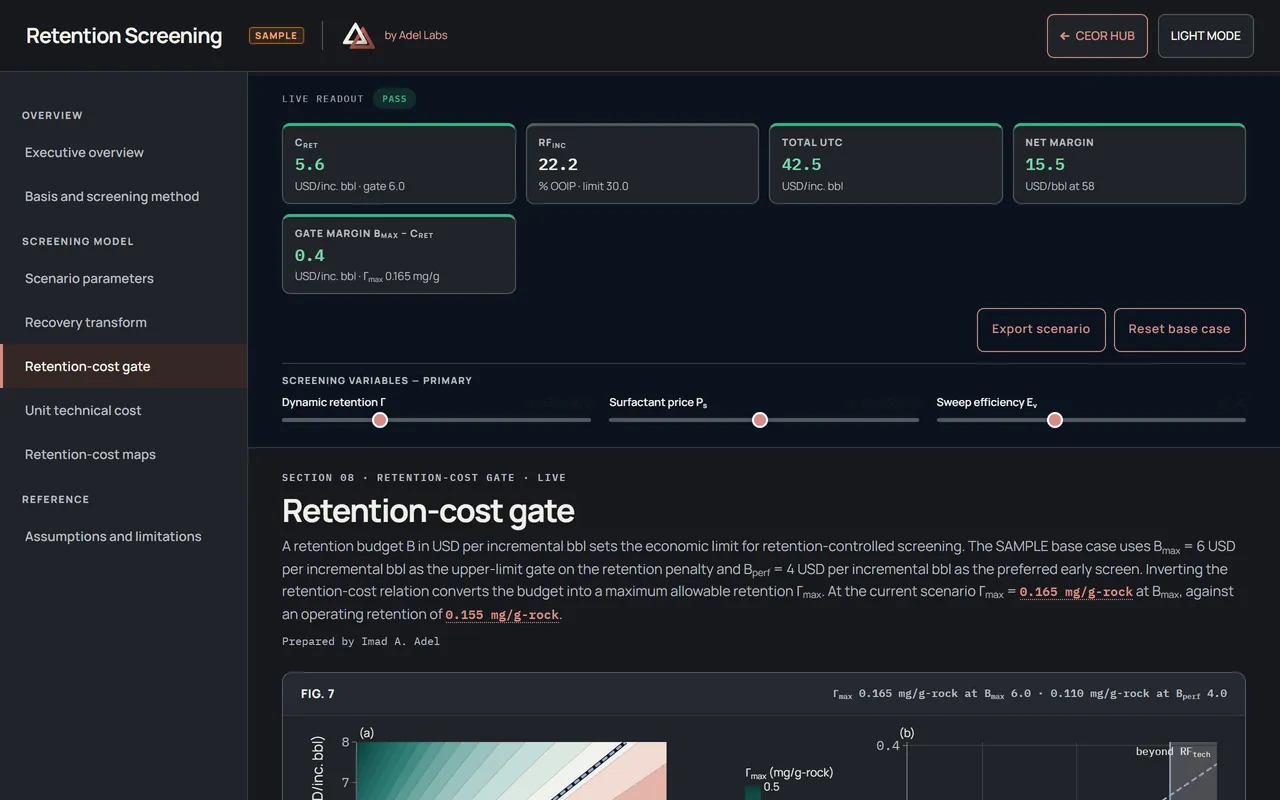
Retention-cost screening with adjustable retention and surfactant price, scenario readouts and the cost-gate plots.

Surfactant CEOR

Institutional research · Study 02

Research & Engineering

Retention-Controlled Screening of Chemical EOR

Surfactant EOR screening in HTHS carbonates: measured phase behaviour, interfacial tension and wettability, and a chemical-cost screening against the project budget.

Research programme · Abu Dhabi

Project context & resources: Retention-Controlled Screening of Chemical EOR
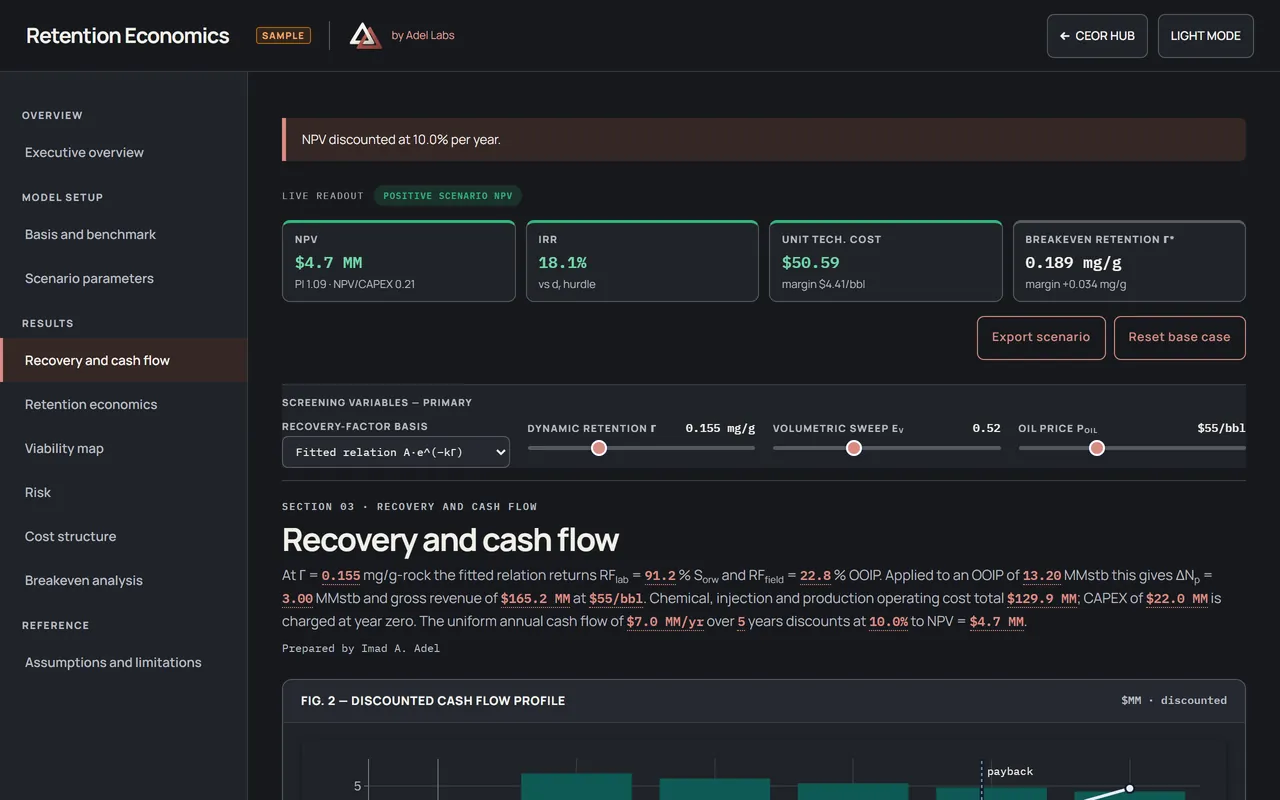
Retention economics cash-flow pane with the retention and price controls, financial readouts and discounted cash-flow plot.

Surfactant CEOR

Institutional research · Study 03

Research & Engineering

Retention Economics

Discounted-cash-flow screening that turns surfactant retention into net present value, return rate, unit technical cost and breakeven retention, on twelve SAMPLE screening records, with adjustable assumptions.

Research programme · Abu Dhabi

Project context & resources: Retention Economics

Full titleTechno-Economic Screening under Retention Uncertainty

The task
A single result cannot describe project economics across changing assumptions. Readers need to inspect both the data and the conditions behind the calculation.
The contribution
Discounted-cash-flow screening based on twelve SAMPLE screening records, with adjustable retention, sweep and oil-price inputs linked live to net present value, return rate, unit technical cost and breakeven retention.
Scope & assumptions
Economic outputs depend on the selected sweep, retention, price and cost assumptions.
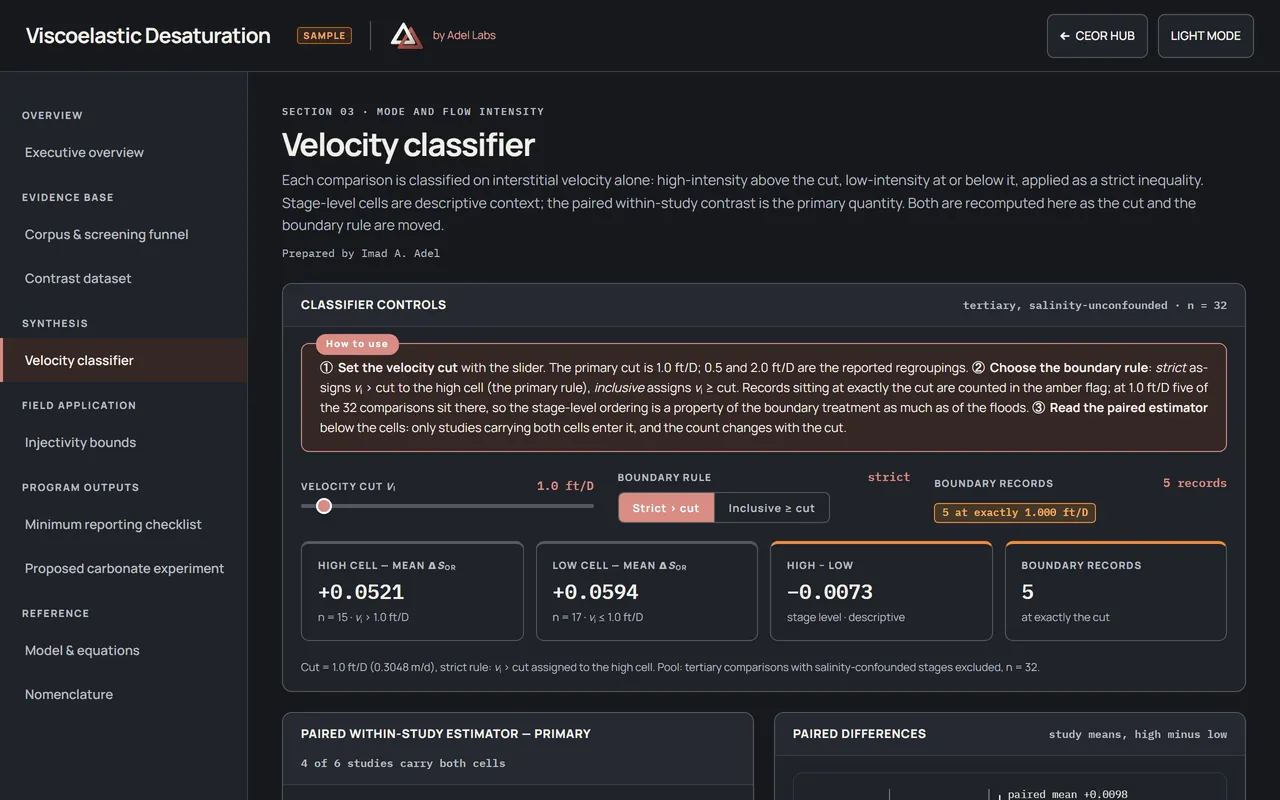
Viscoelastic-polymer report with the adjustable velocity classifier, contrast results and paired-difference plot.

Surfactant CEOR

Institutional research · Evidence synthesis

Research & Engineering

Viscoelastic Polymer Desaturation

Interactive evidence synthesis with a contrast dataset, adjustable velocity classifier and carbonate injectivity bounds.

Research programme · Abu Dhabi

Project context & resources: Viscoelastic Polymer Desaturation
The task
Reported polymer recovery must be read alongside velocity, rock type and operating conditions.
The contribution
An interactive evidence synthesis with a contrast dataset, adjustable velocity classifier and carbonate injectivity bounds.
Scope & assumptions
Interpretations are bounded by the underlying studies and stated injectivity assumptions.

GEOR programme

Gas EOR Project opening page with a circular laboratory-apparatus film and the unconventional-reservoir research introduction.

GEOR — Gas EOR in Unconventional Reservoirs

Institutional research · Program hub

Research & Engineering

Gas EOR Project

Explore gas recovery in unconventional reservoirs through miscibility, operating pressure, gas composition, foam and hybrid recovery. Adjust scenario inputs, compare calculated outputs and follow the published papers behind each study.

Institutional research · Texas A&M University

Project context & resources: Gas EOR Project

Full titleGEOR Project

The task
Gas-recovery studies examine miscibility, gas composition, operating pressure and hybrid recovery across different experimental conditions.
The contribution
A program hub connecting the gas-recovery studies, interactive mechanisms, operating scenarios and published papers from the Texas A&M program.
Scope & assumptions
Each linked report states its experimental conditions and assumptions; the hub provides a route through the program.
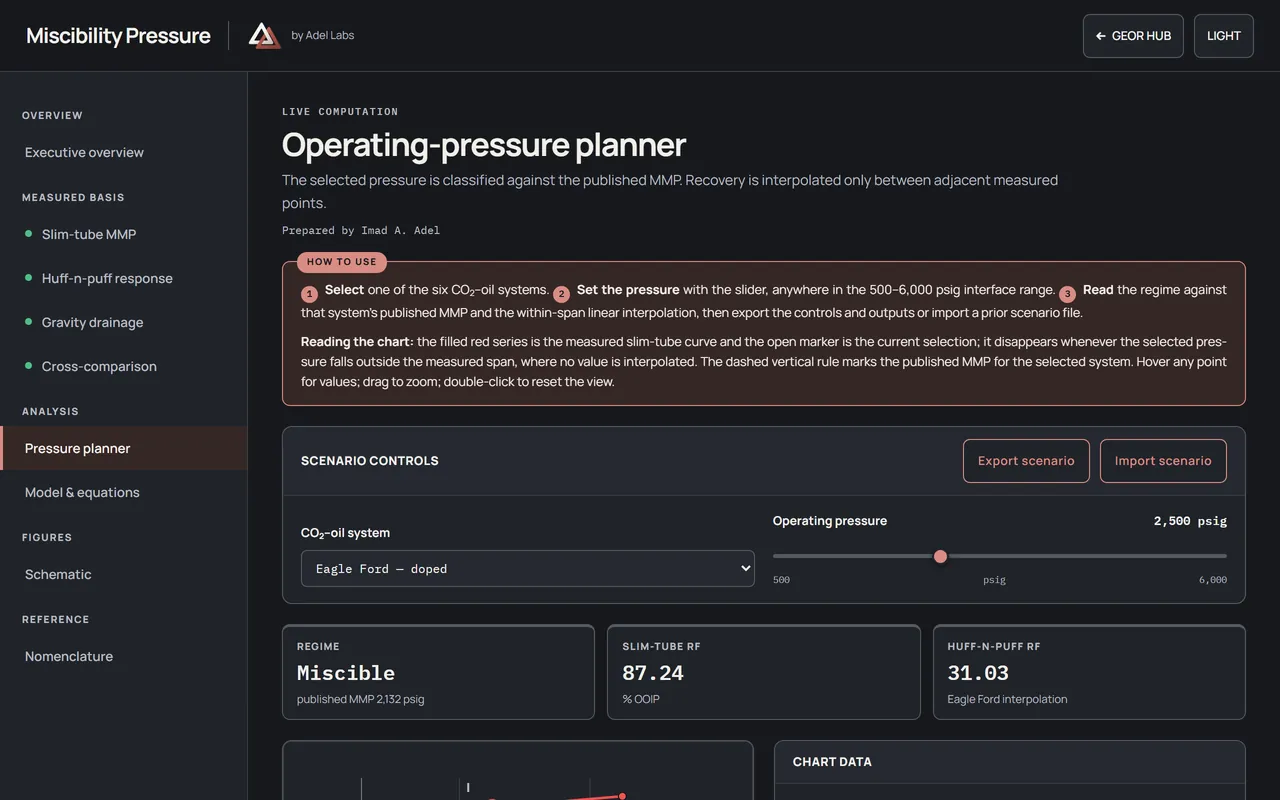
Operating-pressure planner with the pressure control, miscibility status, recovery curve and current-selection table.

GEOR — Gas EOR in Unconventional Reservoirs

Institutional research · Report 01

Research & Engineering

Miscibility and Operating Pressure

Slim-tube MMP across six CO2–crude systems, pressure-dependent huff-n-puff recovery, gravity-stable displacement, and an operating-pressure planner.

Institutional research · Texas A&M University

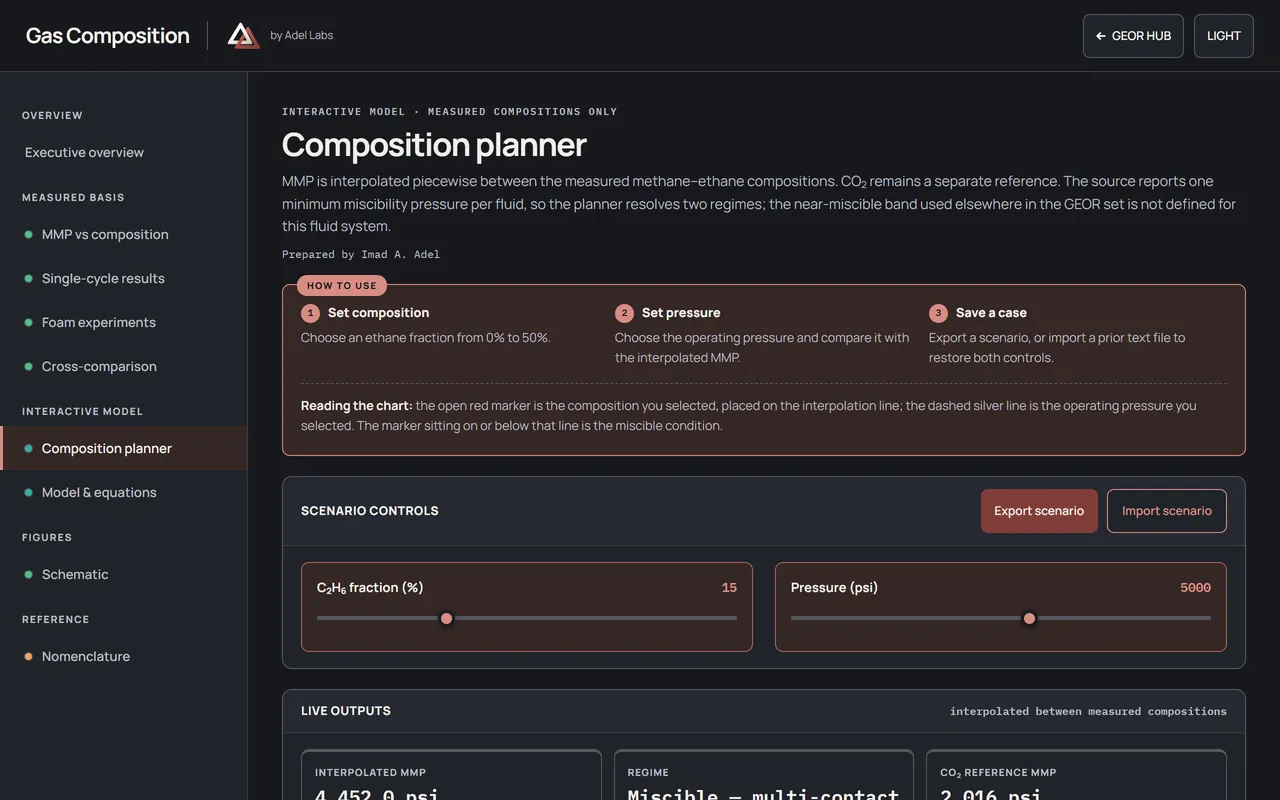
Gas-composition planner showing composition and pressure controls, miscibility status and the interpolated minimum-miscibility-pressure curve.

GEOR — Gas EOR in Unconventional Reservoirs

Institutional research · Report 02

Research & Engineering

Gas Composition and Foam

Wolfcamp A miscibility pressure interpolated between measured methane–ethane compositions, huff-n-puff recovery, foam co-injection, and a planner.

Institutional research · Texas A&M University

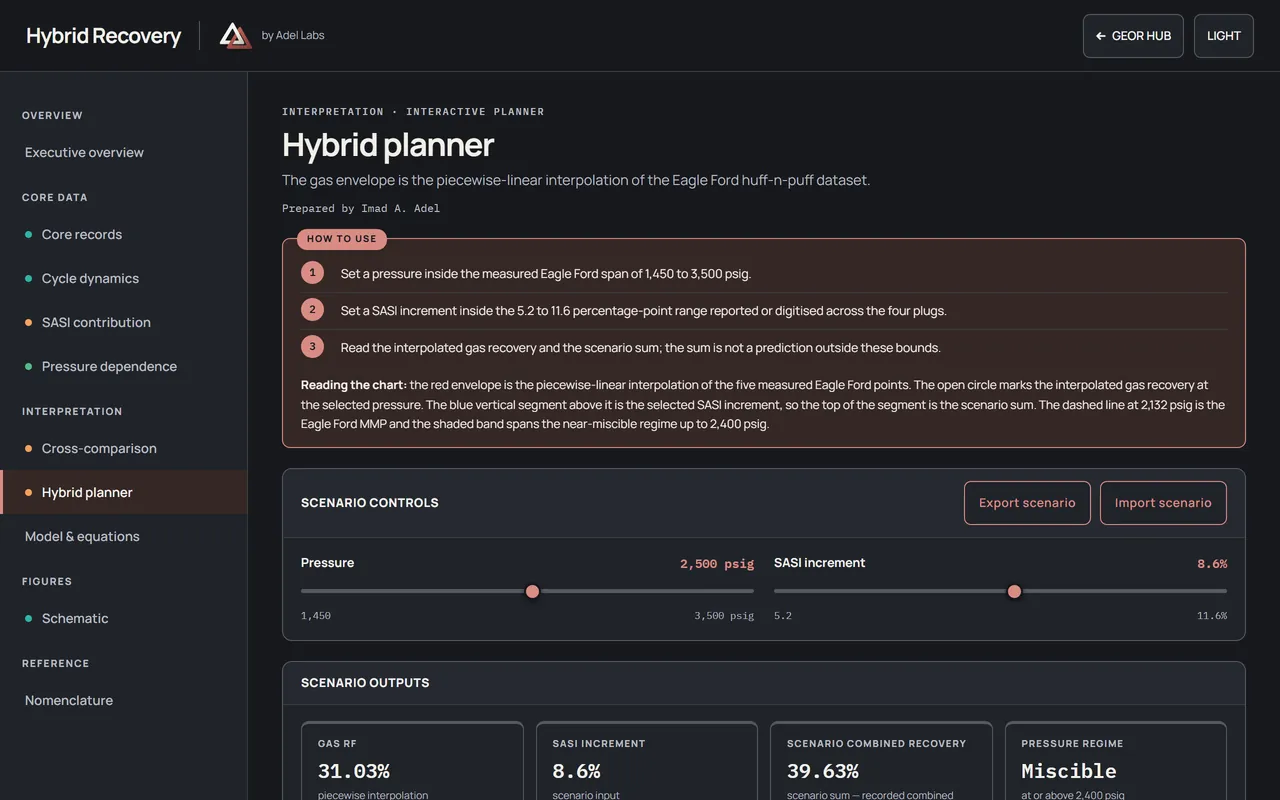
Hybrid recovery planner with pressure and SASI increment controls, scenario readouts and the recovery envelope.

GEOR — Gas EOR in Unconventional Reservoirs

Institutional research · Report 03

Research & Engineering

Hybrid Gas and Chemical Recovery

CO2 huff-n-puff followed by surfactant-assisted imbibition in Eagle Ford plugs — cycle dynamics, the SASI contribution, and a scenario planner.

Institutional research · Texas A&M University

Teaching Companions

4 projects

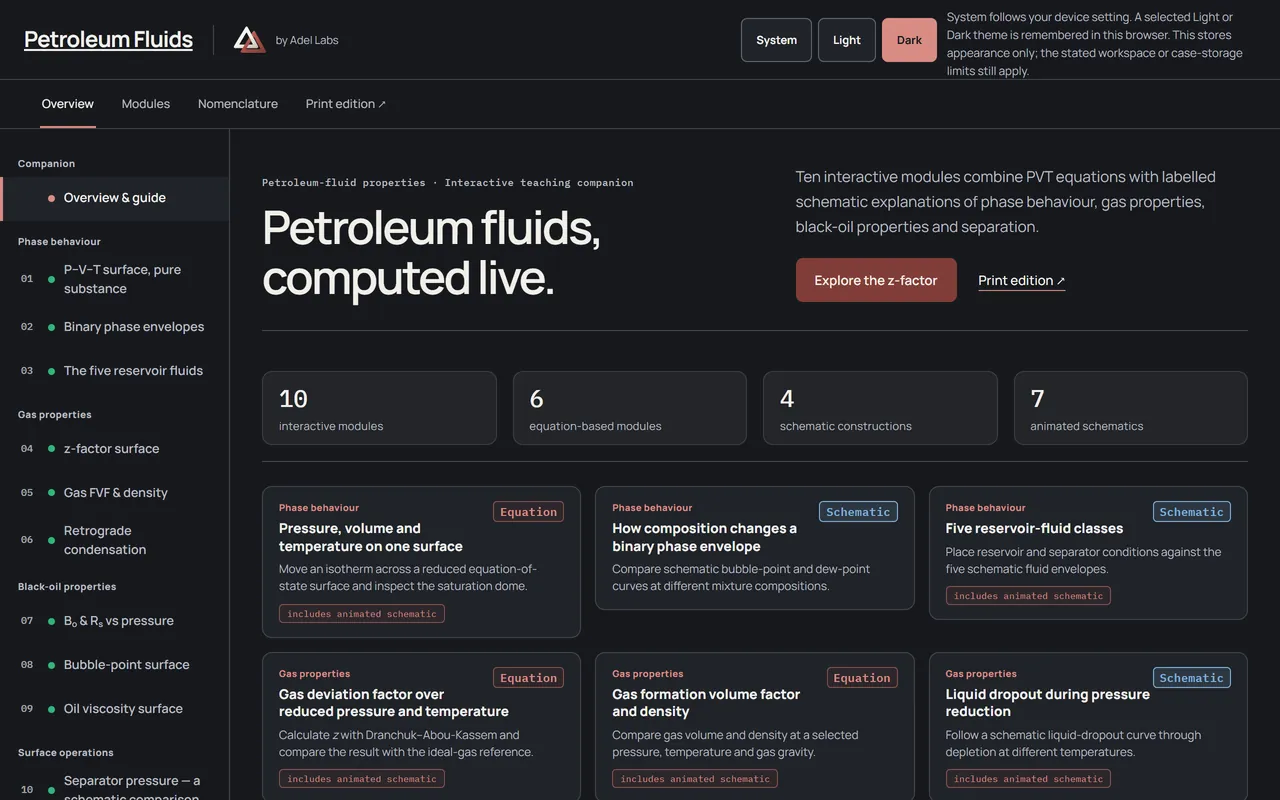
Petroleum Fluids companion in Adel Labs dark mode, with its LINK header, PVT introduction and ten interactive modules.

Independent work · Teaching companion

Research & Engineering

Petroleum Fluids Teaching Companion

Ten interactive modules combine published PVT correlations with labelled schematic explanations. Change inputs, inspect the result and review the stated basis.

Learning resource. Calculations use the assumptions and units stated in each module; they are not field-design tools.

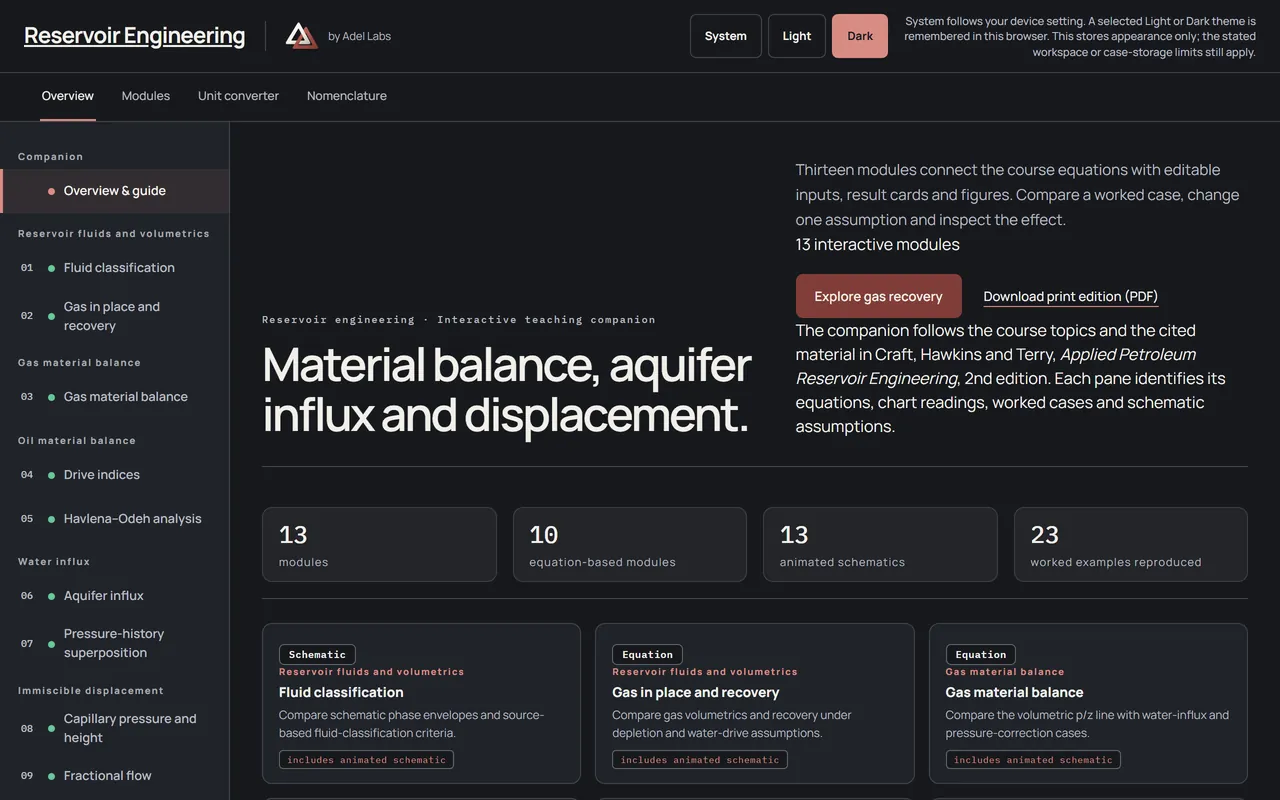
Reservoir Engineering companion in Adel Labs dark mode, with its LINK header, material-balance introduction and thirteen interactive modules.

Independent work · Teaching companion

Research & Engineering

Reservoir Engineering Teaching Companion

Material balance, aquifer influx and displacement: thirteen reservoir-engineering calculations, each computed live beside its explanation and a visual model.

Learning resource. Calculations use the assumptions and units stated in each module; they are not field-design tools.

Project context: Reservoir Engineering Teaching Companion
The task
Engineering equations are easier to inspect when a reader can change an input and follow the response next to the explanation.
The contribution
A browser-based teaching companion connecting reservoir-engineering calculations with explanatory material and visual models, in dark mode.
Scope & assumptions
A learning resource: calculations are read with the assumptions and units stated in each module.
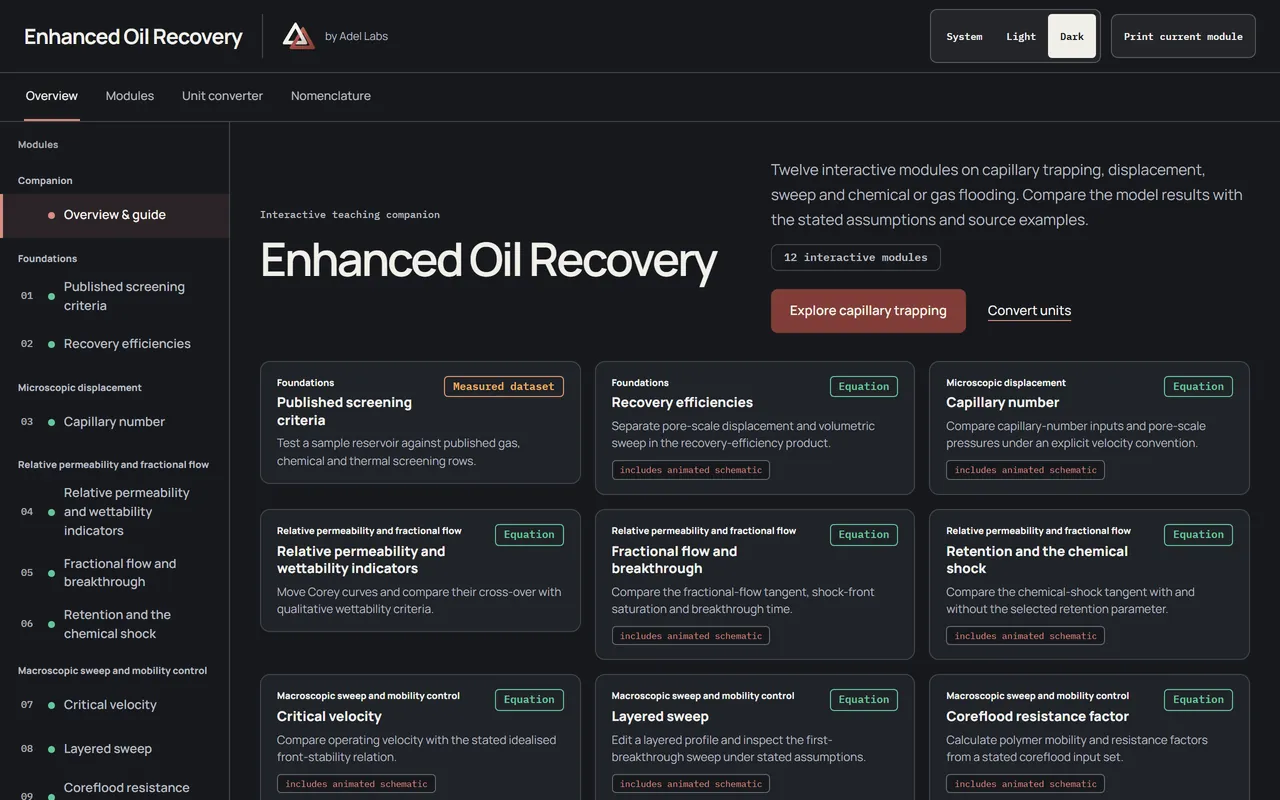
Enhanced Oil Recovery companion in Adel Labs dark mode, with its LINK header and twelve interactive teaching modules.

Independent work · Teaching companion

Research & Engineering

Enhanced Oil Recovery Teaching Companion

Twelve modules on the mechanisms that mobilise trapped oil: capillary number, fractional flow, sweep, polymer, gas and surfactant processes, computed live.

Learning resource. Calculations use the assumptions and units stated in each module; they are not field-design tools.

Project context: Enhanced Oil Recovery Teaching Companion
The task
A learner needs to connect an enhanced-oil-recovery mechanism with the calculation used to inspect it.
The contribution
A teaching companion with explanatory modules, calculation controls and visible assumptions.
Scope & assumptions
Learning resource; inspect the units and assumptions in each module before using a result.
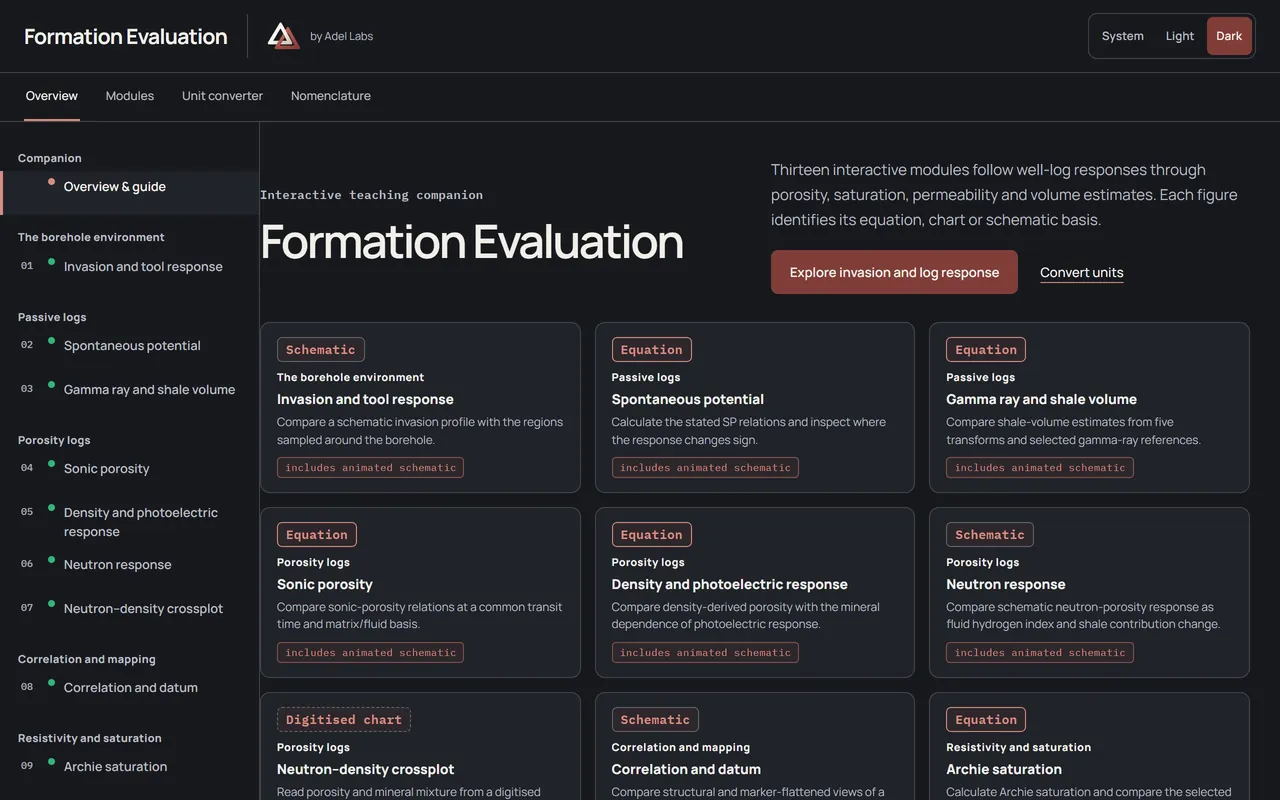
Formation Evaluation companion in Adel Labs dark mode, with its LINK header and thirteen well-log and petrophysics modules.

Independent work · Teaching companion

Research & Engineering

Formation Evaluation Teaching Companion

From log response to net-pay and volume estimates. Explore invasion, resistivity, porosity and saturation with visible assumptions and worked calculations.

Learning resource. Calculations use the assumptions and units stated in each module; they are not field-design tools.

Commission related work

Make the evidence easier to inspect.

The related service sets out the scope and acceptance checks. Prepare a project brief on your device to describe the task.